
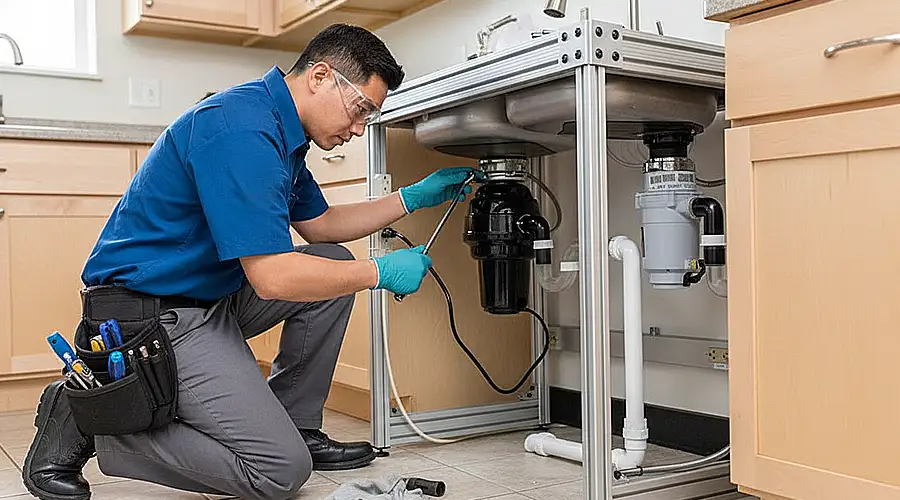
A garbage disposal’s reset button serves as a safeguard. When the appliance operates under certain conditions, its internal protection can interrupt power before additional stress occurs. Pressing the reset button may restore normal operation, making the incident seem insignificant. However, a disposal that repeatedly requires resetting may be communicating that something within the system needs attention.
Instead of viewing frequent resets as part of normal operation, homeowners can treat them as useful warning signals. The cause may involve the motor, electrical supply, internal movement, workload, or deterioration within the unit. Identifying the pattern behind the resets can make it easier to determine what should happen next.
The Motor May Be Experiencing Excessive Stress
A garbage disposal motor is designed to operate within specific limits. When resistance becomes too great, the appliance may shut itself down to protect its internal components.
This can occur when too much material is introduced at once. Even waste that would normally be manageable can create excessive resistance when packed into the grinding chamber in a large quantity. Dividing waste into smaller amounts gives the unit more opportunity to process material without placing unnecessary demand on the motor.
If resets become necessary even during light use, however, workload alone may not explain the behavior.
Internal Movement May Be Restricted
A disposal can sometimes receive power without being able to move properly. Material lodged inside the chamber may restrict the rotating components and cause the protective system to activate.
A humming sound without normal disposal operation is one possible clue that the unit is receiving electricity while internal movement is restricted. Repeatedly pressing the reset button in this situation does not remove the physical obstruction.
The disposal should be switched off before any further investigation. Homeowners should never place their hands inside the appliance. Safe inspection procedures or professional service are preferable when an obstruction cannot be identified easily.
Overheating Can Trigger Protective Shutdowns
Heat can develop when the disposal motor works harder or longer than intended. Extended operating periods may cause the unit to shut down until its temperature decreases.
An occasional shutdown following unusually demanding use may have an understandable cause. A different concern arises when the appliance overheats during short, ordinary operating cycles. That pattern may indicate increasing internal resistance or declining motor performance.
Allowing the appliance to cool may temporarily restore operation, but repeated overheating deserves further investigation rather than an endless cycle of cooling and resetting.
Electrical Problems May Be Involved
Not every reset-related problem begins with food waste or mechanical resistance. Electrical conditions can also influence garbage disposal performance.
Loose wiring, an aging switch, inconsistent power delivery, or problems associated with the appliance itself may cause unpredictable operation. Homeowners may notice that the disposal shuts down without a clear connection to the amount of waste being processed.
Electrical troubleshooting around kitchen plumbing requires appropriate care because electricity and water are present in close proximity. When the source of repeated shutdowns is uncertain, people researching affordable plumbing Houston TX services may benefit from choosing professionals who can assess the disposal installation and recognize when separate electrical expertise is necessary.
An Aging Motor May Be Losing Performance
Garbage disposals experience gradual internal wear throughout their service life. A motor that once handled routine kitchen waste easily may eventually require more effort to perform the same work.
Frequent resets can therefore appear as an appliance gets older. Other symptoms may develop alongside them, including inconsistent startup, changes in operating sound, slower processing, or unexpected shutdowns.
These combined symptoms can provide a better indication of declining condition than age alone.
The Reset Button Should Not Become A Routine Fix
The convenience of the reset button can sometimes hide a developing problem. If pressing it immediately restores operation, homeowners may continue doing so without asking why the protective mechanism keeps activating.
Keeping track of when shutdowns occur can provide useful information. Consider whether they happen after heavy use, during ordinary operation, immediately after startup, or after the disposal has been running for a particular amount of time. A consistent pattern can help narrow down potential causes.
Final Thoughts
A garbage disposal reset button provides more than a way to restart an appliance. Repeated activation can indicate excessive motor demand, restricted internal movement, overheating, electrical irregularities, or age-related deterioration. Rather than treating every shutdown as an isolated inconvenience, homeowners should pay attention to how frequently resets are needed and what happens immediately beforehand. Addressing the underlying reason can help prevent an unreliable disposal from becoming a sudden kitchen disruption.
